

Before you start
- Coaching must be enabled for your organization (Settings > Features).
- You need a coach or admin role. Agents can view their own sessions but can’t create or edit them.
- Have the tickets or evaluations you want to reference in mind; sessions are most useful when grounded in real interactions.
Create a session
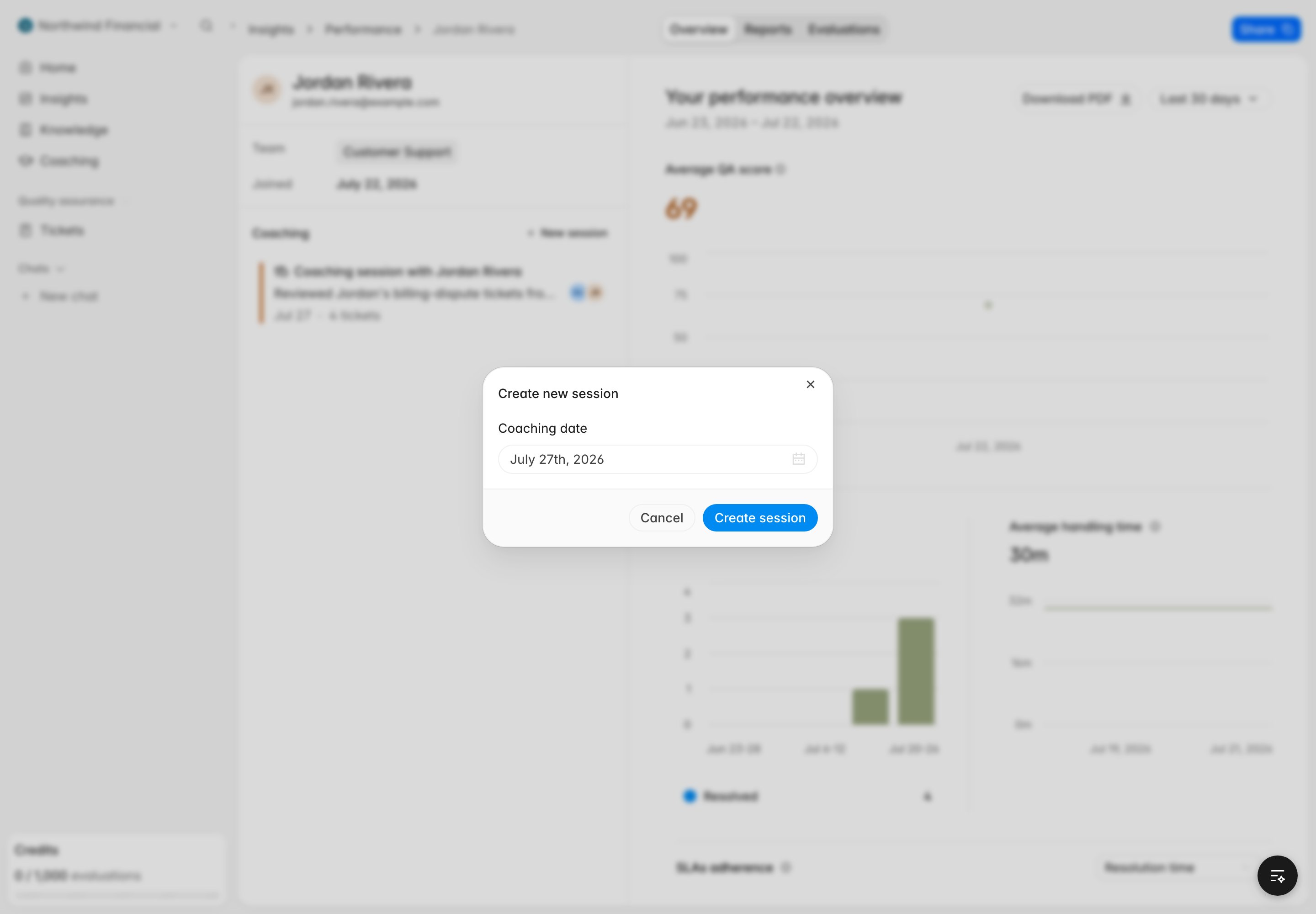
Coaching sessions live on the agent’s performance page, not the Coaching page. The score trend, the criteria the agent keeps failing, and the tickets behind both are already in front of you there. Use team and agent performance covers reading that page before you book the 1:1.- Open the agent’s performance page (Insights > Performance, then drill into the agent, or open the agent from any evaluation).
- In the Coaching sessions timeline, click New session.
- Pick the coaching date. New sessions default to now; change it to when the coaching happened or is planned.
- Save. The session opens so you can add notes and evidence.
Add evidence: tickets and evaluations
Evidence links a coaching point to a real ticket and its QA result.- In the open session, add a ticket by its conversation.
- Rulebase attaches the ticket’s QA score. If you don’t choose a specific evaluation, it automatically uses the best completed evaluation for that ticket and this agent, preferring a human evaluation over an AI one, and the most recent.
- Add per-ticket feedback to explain what you want the agent to notice.
An evaluation can only be attached as evidence when it belongs to the same
ticket and the agent being coached. Rulebase blocks mismatched evidence so
a session never references another agent’s score.
Write notes
Session notes use markdown, so you can structure the conversation with headings, bullets, and links. Keep notes specific and tied to the evidence you attached.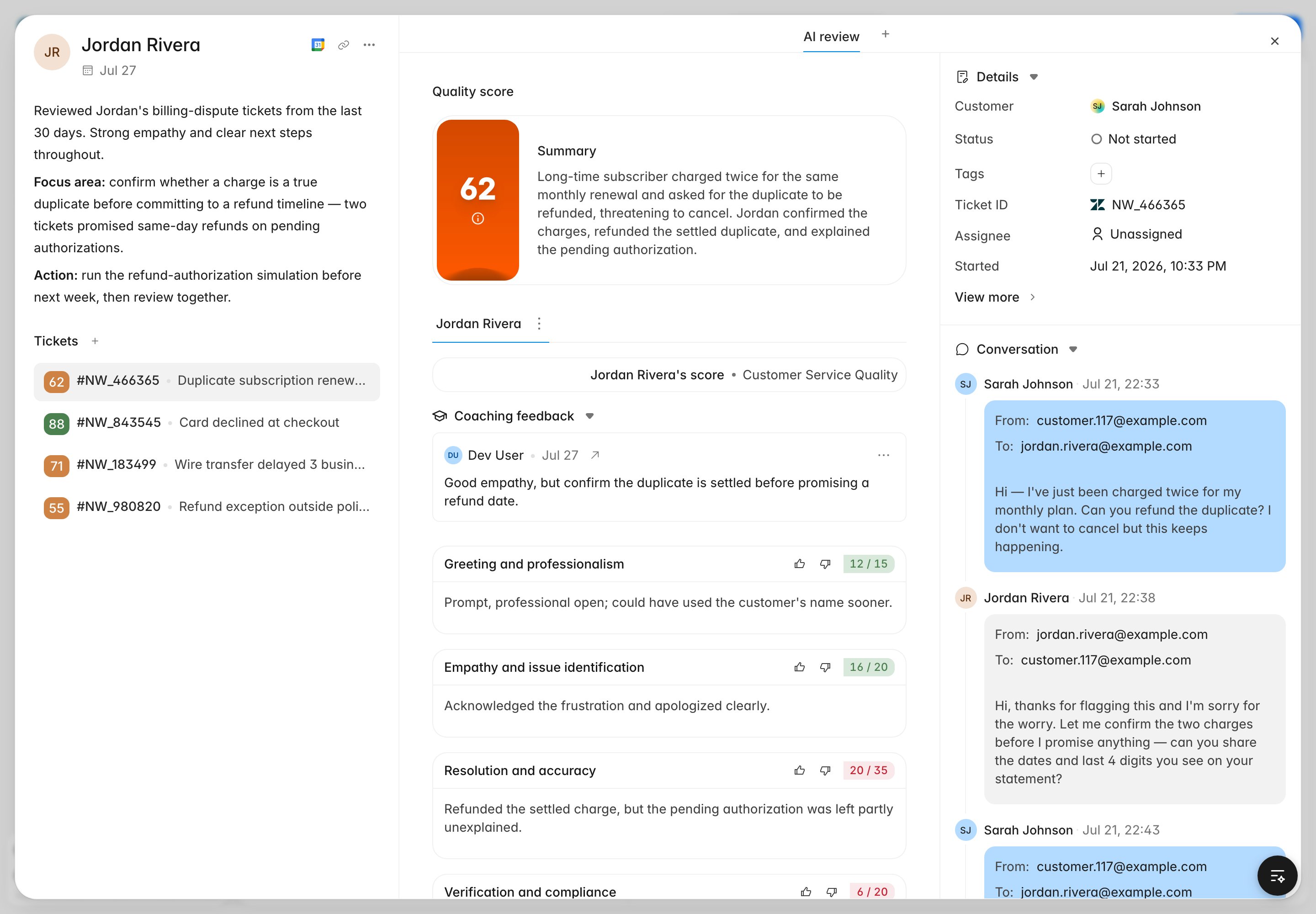
Share a session
Use Copy link in the session to share a direct URL (/coaching/sessions/{id}). The link resolves the session and opens it on the
agent’s performance page, so recipients land in the right place.