

Work through them in order; each rules out the next, even if you have a hunch.
Start on the roster
The agent roster at Settings > People > Agents is the list of people Rulebase runs QA and performance on, and everything downstream reads from it. If someone is not on this page, they will not appear in reports, and no amount of looking in Insights will change that.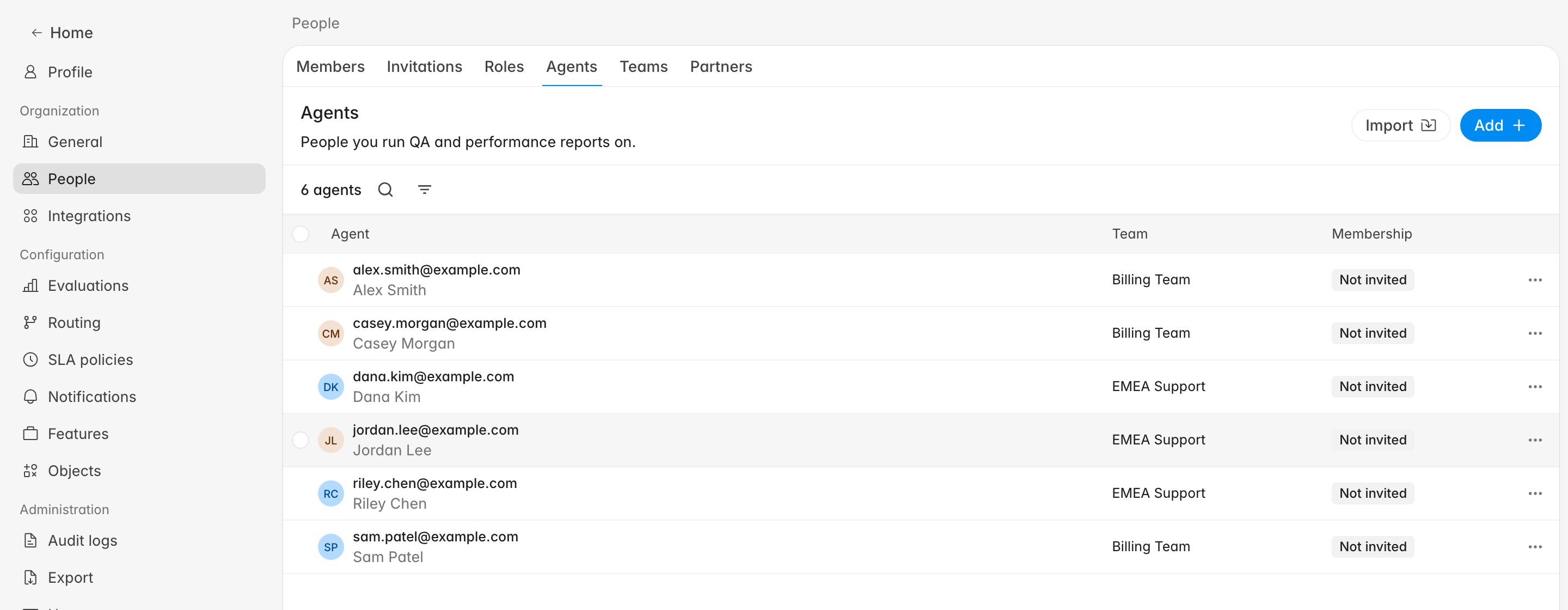
The roster and a Rulebase login are separate things. The Membership column
tracks the login separately, and an agent showing Not invited is evaluated
normally. Do not chase an invitation to fix a reporting gap.
Team views only show agents who have a team
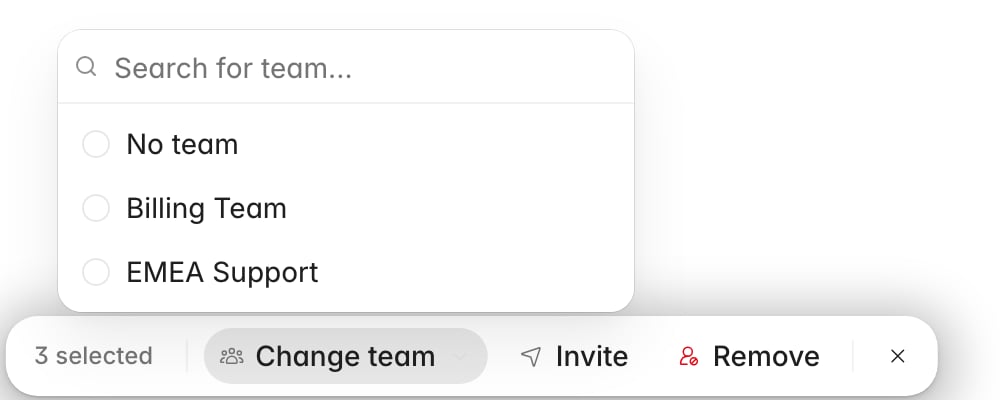
The roster gives this away in a single column. An agent whose Team column reads- belongs to no team, and team performance is organized entirely by team:
Insights > Performance drills from a team into
its agents, so someone with no team has no page to be found on. Their tickets are
still evaluated and their evaluations still exist. There is just no route to them
through team views.
On the roster, in a team, but no score
The agent is visible now, but the numbers are empty or lower than you expect. Performance figures are built from evaluations, and an evaluation only counts towards an agent’s score when all of the following are true:- It finished processing. An evaluation still in progress contributes nothing.
- It is the current one. When an evaluation is superseded by a later one (a manual evaluation replacing an AI result, for instance), only the replacement counts.
- Its ticket was evaluated inside the date range you are looking at.
One person, two records
Here the agent is split across two records. When someone’s tickets arrive under a second email address (a help desk account created after a name change, or a personal address on one integration and a work address on another), Rulebase treats those as two people. Each holds part of the history, so both look wrong: one has the tickets you remember and the other has none, and neither total matches reality. Search the roster by surname, since a full-email search finds only one of the two records, and scan the Agent column for their name. Two rows for one person usually means the record is duplicated. Confirm both rows belong to the same person, by matching email or employee ID, before merging; merging reassigns interactions and evaluations and the wrong merge corrupts history. To combine them, open the overflow menu on the row you want to retire and choose Merge. Pick the record to keep under Merge into, and everything linked to the record you opened (interactions, evaluations, and the rest) is reassigned to it. The checkbox underneath, Delete … after merging with the retired record’s name in it, throws the emptied record away. Leaving it unticked is the safer choice on your first merge. The search inside Merge into is not limited to the roster, so it can find a record removed from the roster earlier that is holding history you want back.When the problem is the view
Sometimes the agent record is fine and the view is the problem. You can tell without checking the roster again. No teams appear anywhere. If Insights > Performance reads “No teams found” while Settings > People > Teams clearly lists teams, stop looking at your data. That combination means your own membership cannot resolve which teams it is allowed to see, and the page shows an empty result without telling you so. Nothing you change on the roster will help. Ask a colleague to open the same page: if they see the teams, the problem is your account and Rulebase support can correct it. A team total reads zero above agents with real numbers. A team page showing 0 resolved tickets or 0% review coverage, while the agents table underneath shows tickets and scores for the same period, is a contradiction. The team-level figure needs each ticket linked to a team; the agent-level figure does not, so the two can disagree on the same work. Trust the agent rows, which count from the evaluations themselves, and treat the team summary as unreliable until it agrees with them. We are fixing this.Neither of these is caused by anything you did, and neither is fixed by moving
people between teams. Re-importing a roster to chase a zero that turns out to be
this will reassign agents you did not mean to touch, so rule it out before you
start editing.
After you fix it
Roster changes take effect going forward, and the reports catch up on their own. Add someone back or move them into a team and their existing evaluations attach to them again. Nothing needs recalculating by hand, because the numbers derive from evaluations that were already there. Before you close the ticket, confirm:- The agent count above the roster matches the number of people you expect to be evaluated.
- Their team’s page under Insights > Performance lists them, and their own detail page shows the tickets you expected.