

Before you start
- Scorecards live under Knowledge > Scorecards.
- You need a role that can manage scorecards, such as
AdministratororManager. If New is greyed out, your role does not include it. - Decide your point weighting first. Top-level totals must add up to exactly 100.
- Nothing is evaluated until you publish. A draft is invisible to AI QA and to reviewers.
How a scorecard is put together
A scorecard contains sections, sections contain criteria, and criteria contain checks:- Scorecard: the whole rubric, with a name, a description, and an optional scope.
- Section: a themed group such as
Resolution. Its points are the sum of its criteria; you never type a section score directly. - Criteria: the thing being judged, and the level that carries points. Each has score options: Pass, Fail, and optionally Partial or Auto-fail.
- Check: the instruction an evaluator follows inside a criterion, plus the conditions that map an outcome onto a score. A criterion can hold several checks.
Create the scorecard
- Go to Knowledge > Scorecards.
- Click New.
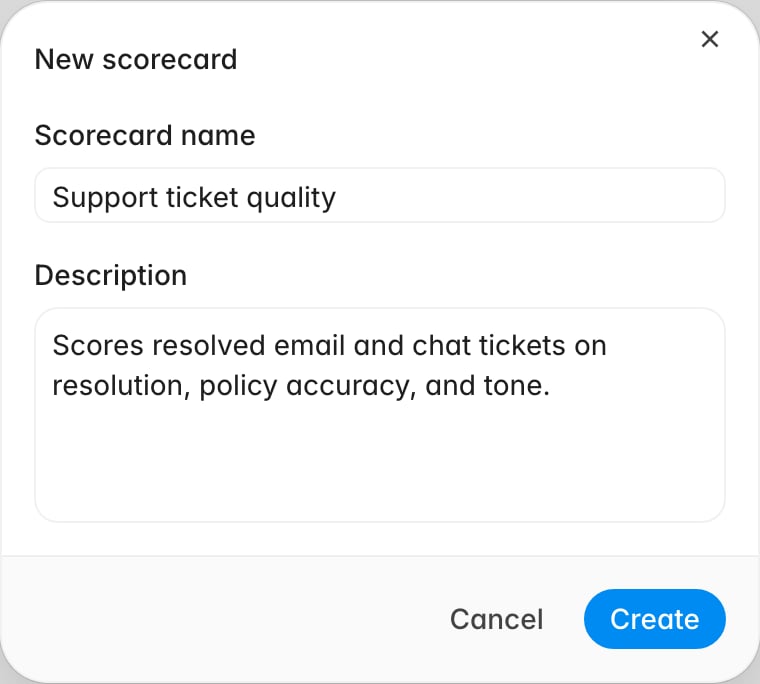
- Give it a Scorecard name a reviewer would recognize, and use Description to record what it covers.
- Click Create.
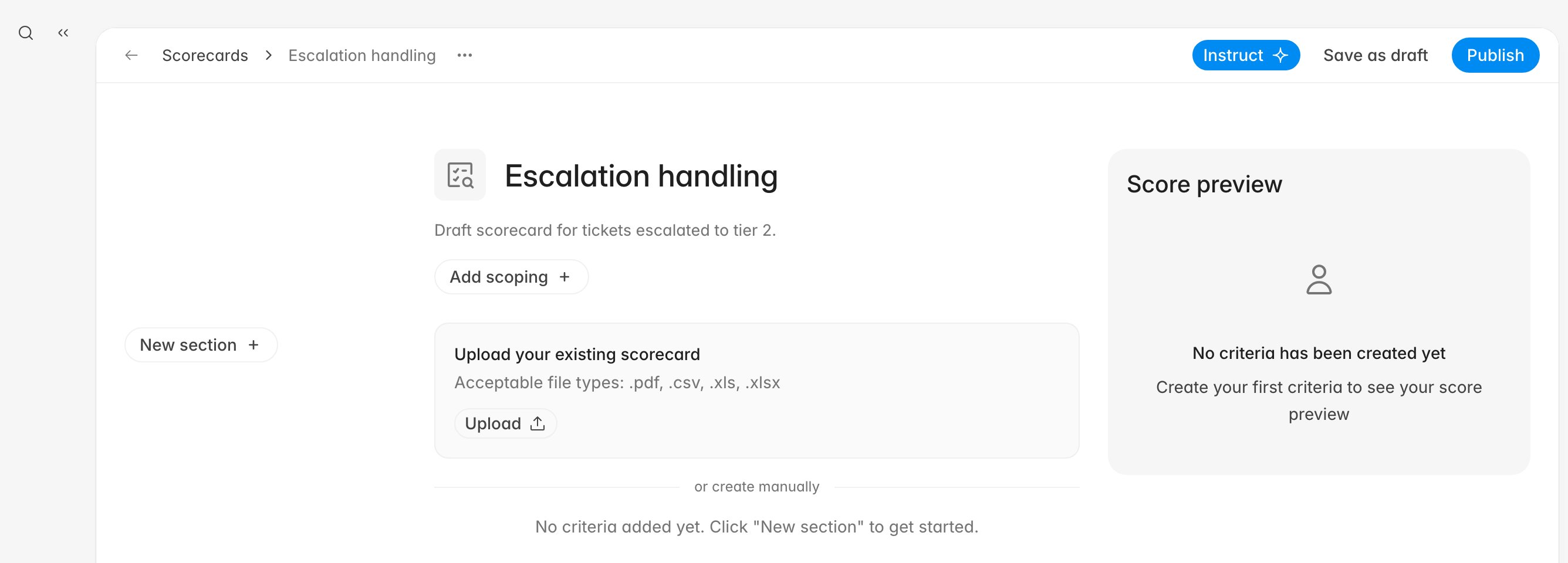
.pdf, .csv, .xls,
or .xlsx) and let Rulebase draft the structure from it, or build it yourself
with New section.
Add your sections
Add all your sections before writing any criteria, so the point budget is visible from the start.- Click New section. Rulebase adds it to the left-hand list with a
placeholder name like
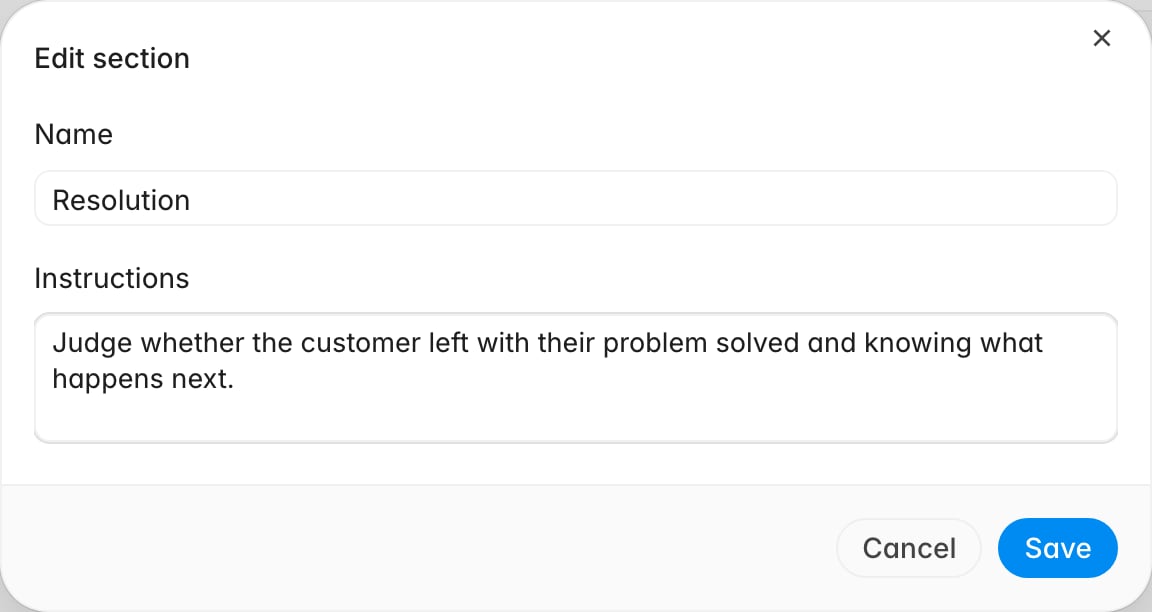
Section 1. - Hover the new section, open its … menu, and choose Edit.
- Set the Name, and use Instructions to tell the evaluator how to think about this theme.
- Click Save.
Write criteria and checks
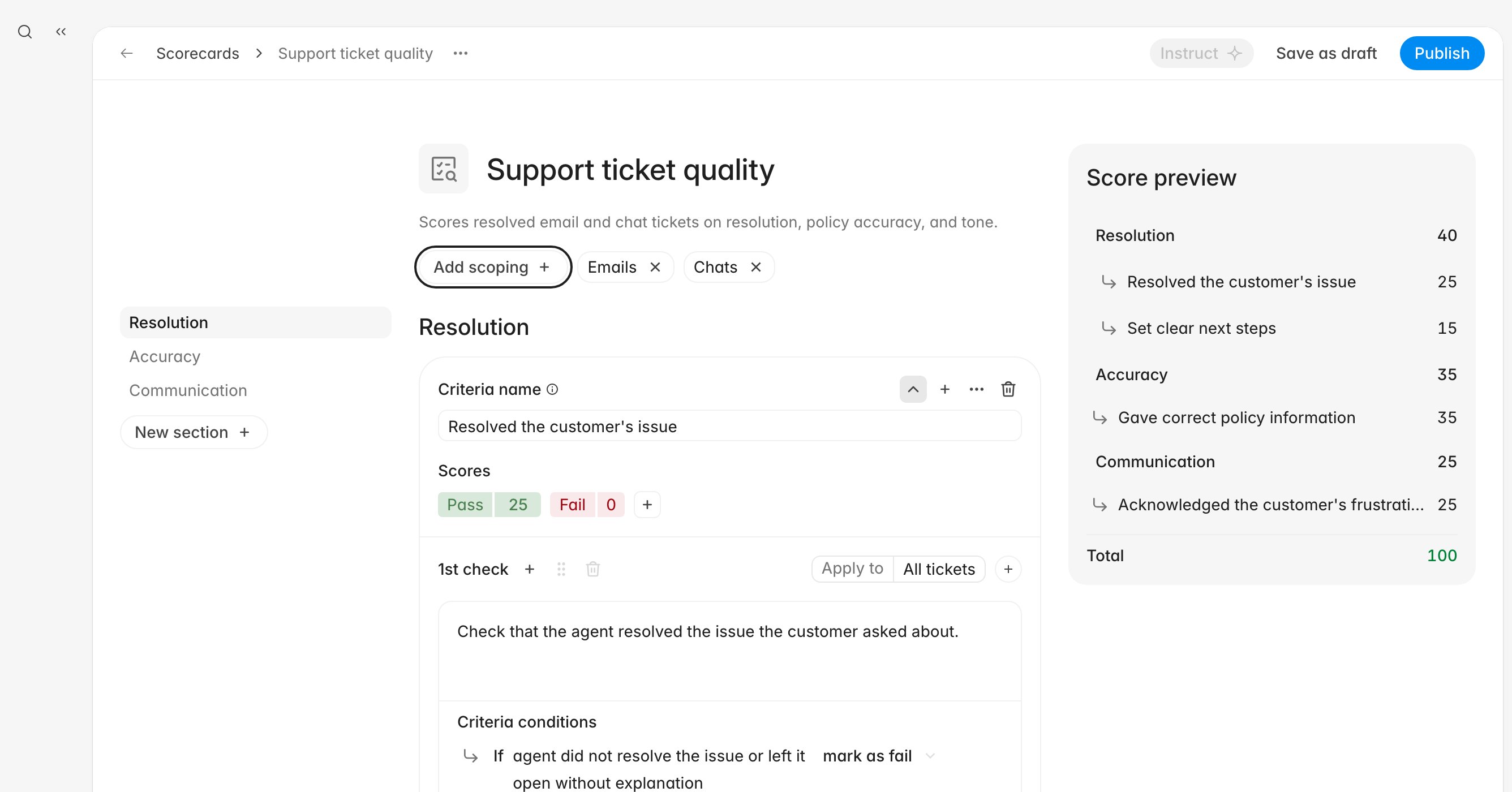
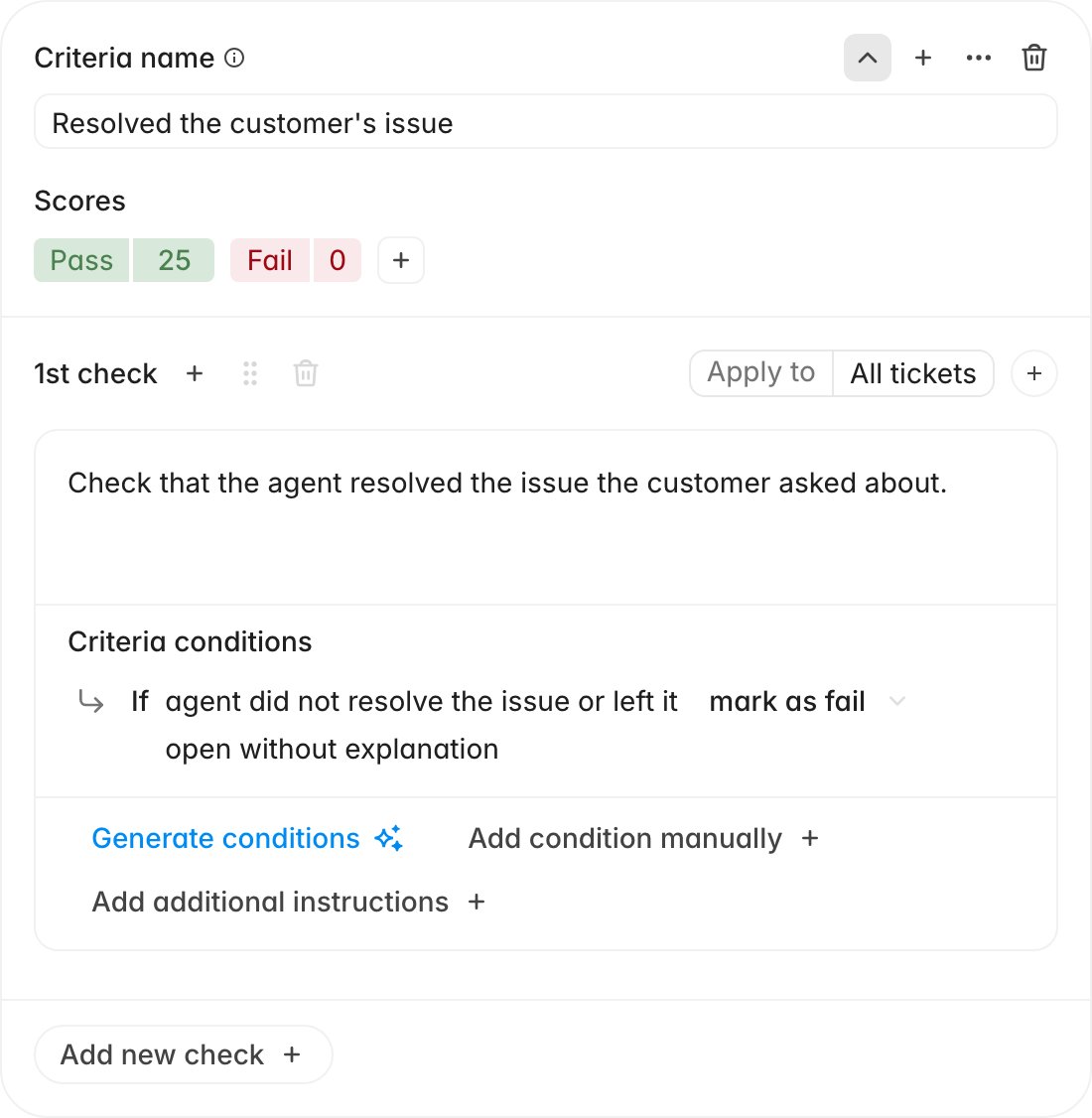
Open a section, then click Create first criteria (or Add criteria once the section has one) and fill in the card.- Type the Criteria name as the thing being judged, phrased so passing is
good:
Resolved the customer's issue. - Set the points. New criteria start at 10, so click the value next to Pass, set the Score, and press Enter. Fail stays at 0.
- Add score options if pass/fail is too blunt. The + next to the scores offers Partial score for partial credit and Auto-fail score, which fails the whole evaluation when selected.
- In 1st check, describe what the evaluator has to look for.
- Give the check its conditions. Generate conditions drafts them from the
criterion and check text; Add condition manually lets you write your own. A
condition pairs an observation with an outcome, reading
If <observation>…mark as fail, choosing from the criterion’s non-passing scores. - Use Add new check when the criterion needs a second judgement, and Add additional instructions for guidance that belongs to this check alone.
Every check needs at least one condition before the scorecard can publish. If a
check has none, publishing stops with a message naming the criterion and the
check number.
Balance the scores to 100
Score preview on the right keeps a running total. Section totals roll up from their criteria, and the Total at the bottom must read 100.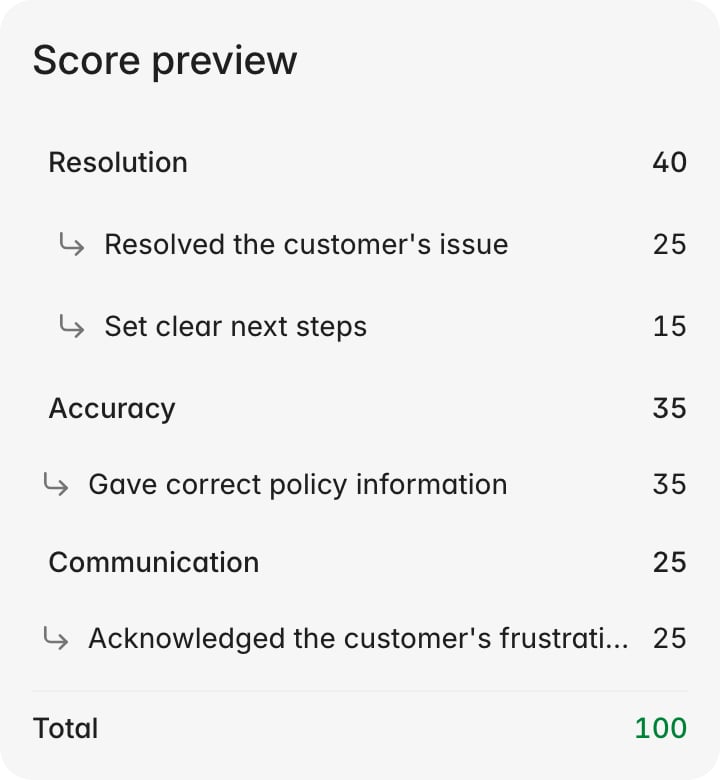
Total score of all top-level criteria must equal 100 and the current number. Weight sections by what you want agents
to optimize for.
Scope it to the right tickets
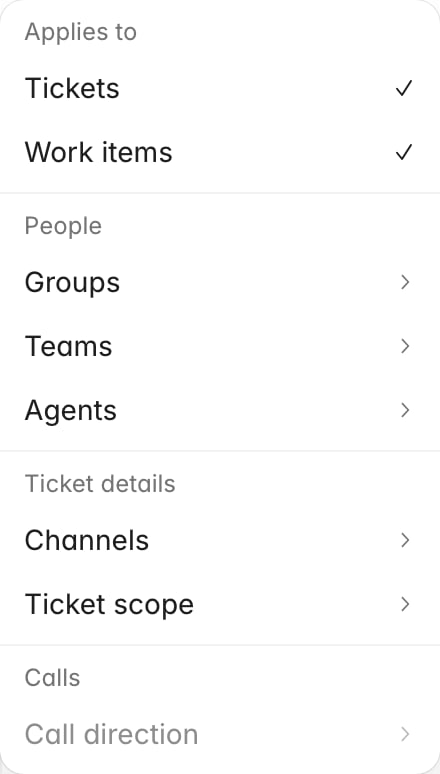
A scorecard with no scope applies to every ticket Rulebase evaluates. That is fine for one company-wide rubric and wrong the moment you have two, so narrow at least one dimension. Click Add scoping in the header and pick from four groups:- Applies to: Tickets, Work items, or both. Both by default.
- People: Groups, Teams, or Agents, for rubrics that only apply to part of the org.
- Ticket details: Channels for email, chat, or calls, and Ticket scope for External tickets or Internal tickets.
- Calls: Call direction, for inbound versus outbound.

Publish it, or keep it as a draft
Publish validates first: a missing condition or off-balance total surfaces as a message. Otherwise it makes the scorecard live and confirms withScorecard published successfully, and from then on matching tickets are scored against it.
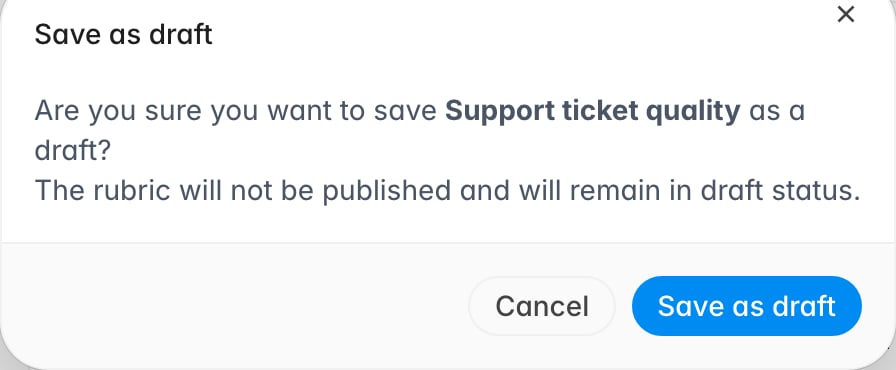
Save as draft keeps everything you have written but leaves the scorecard out
of evaluation. It works on a published scorecard too, to pull one out of
circulation while you rework it.
Confirm it before the first evaluation
- Score preview reads exactly 100, and the section weights match what your team agreed.
- Every check has at least one condition, and between them the conditions cover each way the criterion can be marked down.
- The scoping pills describe the tickets you meant. An empty scoping row means every ticket.
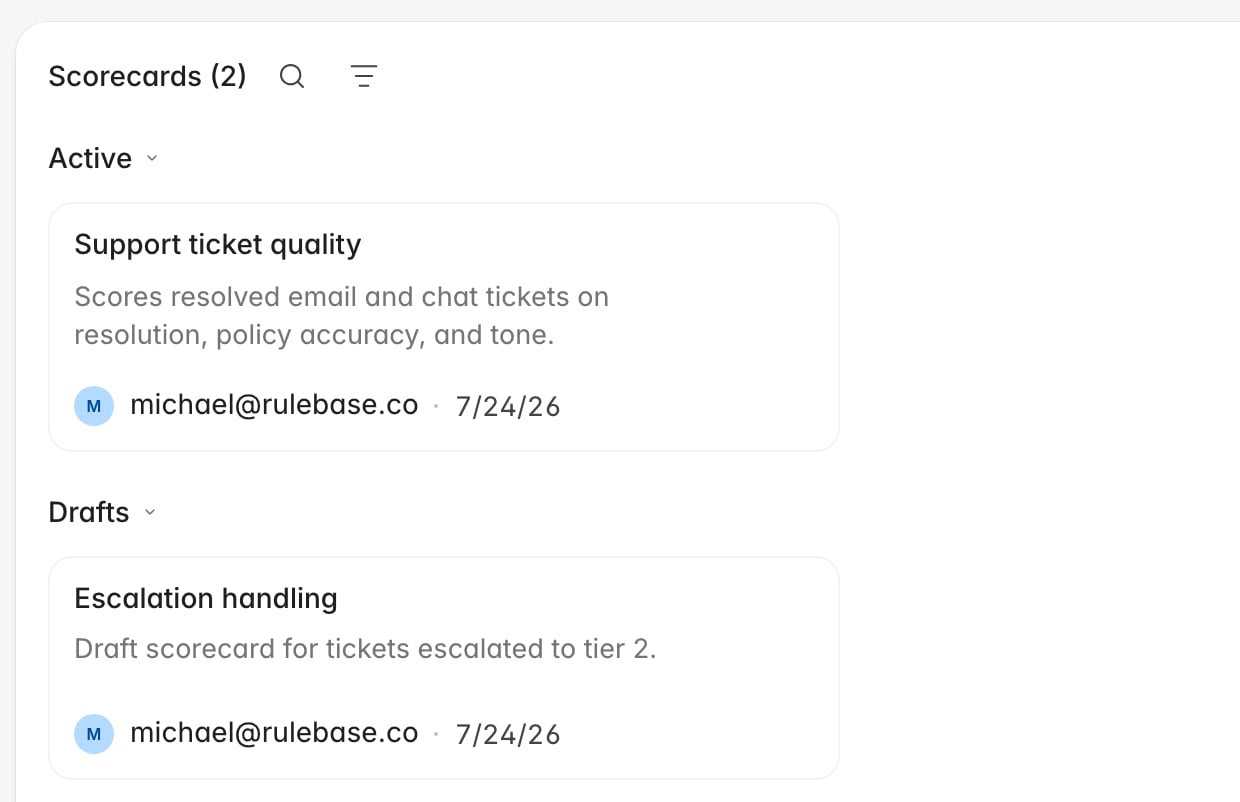
- The scorecard sits under Active. A draft sits under Drafts and never scores.