

Before you start
- You need access to manage organization settings.
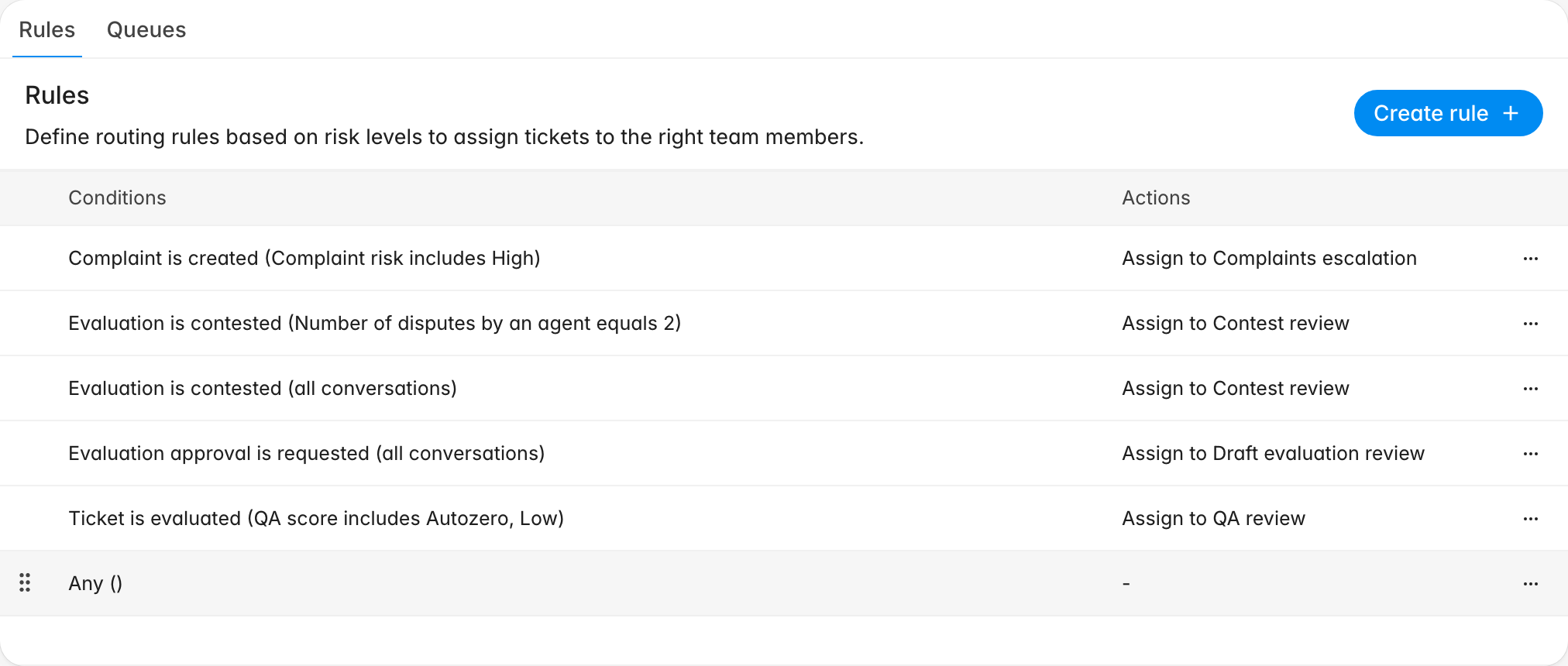
- Open Settings > Routing > Rules. Everything in this guide happens on that page.
- Reordering needs at least two rules. With one rule there is no drag handle.
Read the list as a running order
Each row prints the trigger event, then its conditions in brackets, then what happens.Ticket is evaluated (QA score includes Autozero, Low) means the rule
wakes up when AI QA finishes scoring and only acts when the score landed in
those two bands. (all conversations) in the brackets means the rule has no
conditions and takes every occurrence of its trigger.
When an event fires, Rulebase starts at row one, ignores rules watching a
different event, and stops at the first rule whose conditions all hold. The
rules below it never see that ticket. Nothing in the interface records the
near-miss.
Move a rule
- Hover the row you want to move. A drag handle appears at the left edge.
- Drag the row to its new position.
- Let go. The new order saves immediately; there is no separate save step.
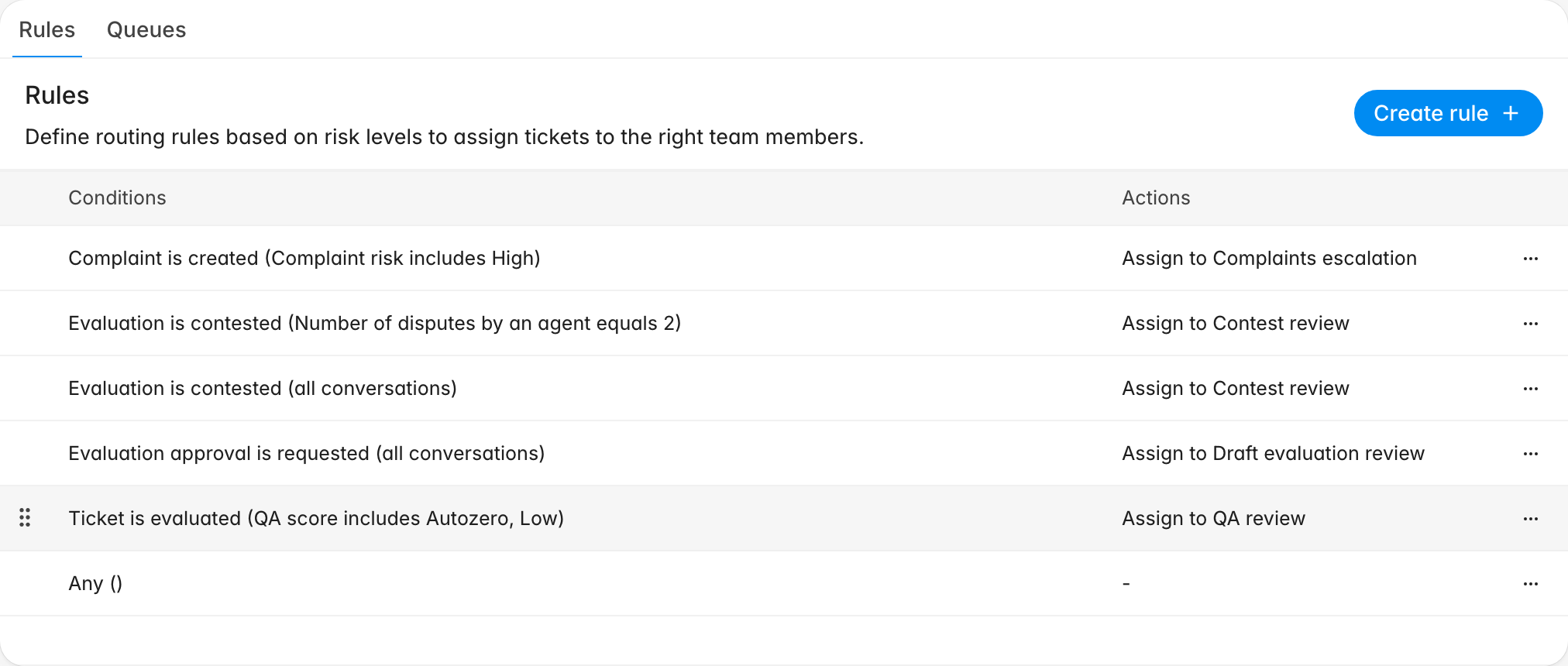
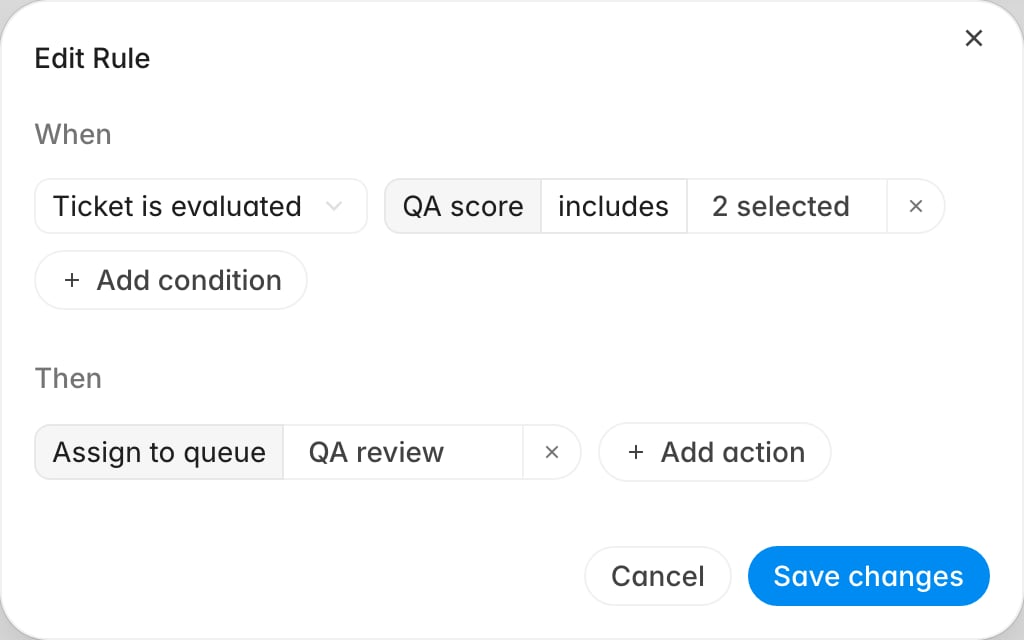
Rules cannot be paused. The row menu offers Edit and Delete, and there is
no enabled column, so position is the only non-destructive control. Parking
a rule at the bottom of the list is the closest thing to switching it off while
keeping it.
Decide where each rule belongs
Ordering is a judgement call, but a few patterns hold for almost every setup:- Narrowest conditions at the top. A rule for
Complaint risk includes Highshould sit above one that takes every complaint, or the general rule absorbs the urgent ones. - Escalations above their base case. A repeat-dispute rule
(
Number of disputes by an agent equals 2) has to outrank the first-contest rule, otherwise every contest is treated as a first. - Catch-alls last. Any rule showing
(all conversations)is a fallback by definition. It belongs at the end of its trigger’s cluster, not the start. - The rule you didn’t create belongs at the bottom. Most organizations have a
rule reading Any under Conditions and
-under Actions. It watches every event, it matches low-scoring tickets, and it still stops the rules underneath it even though it appears to do nothing. If your routing only fails on tickets that scored badly, drag your rules above it and read Why didn’t my routing rule fire? for the full diagnosis.
Edit a rule
Click anywhere on a row to open it, or use the row menu and choose Edit. The dialog is the one you used to create the rule: the trigger, the conditions, and the actions are all editable.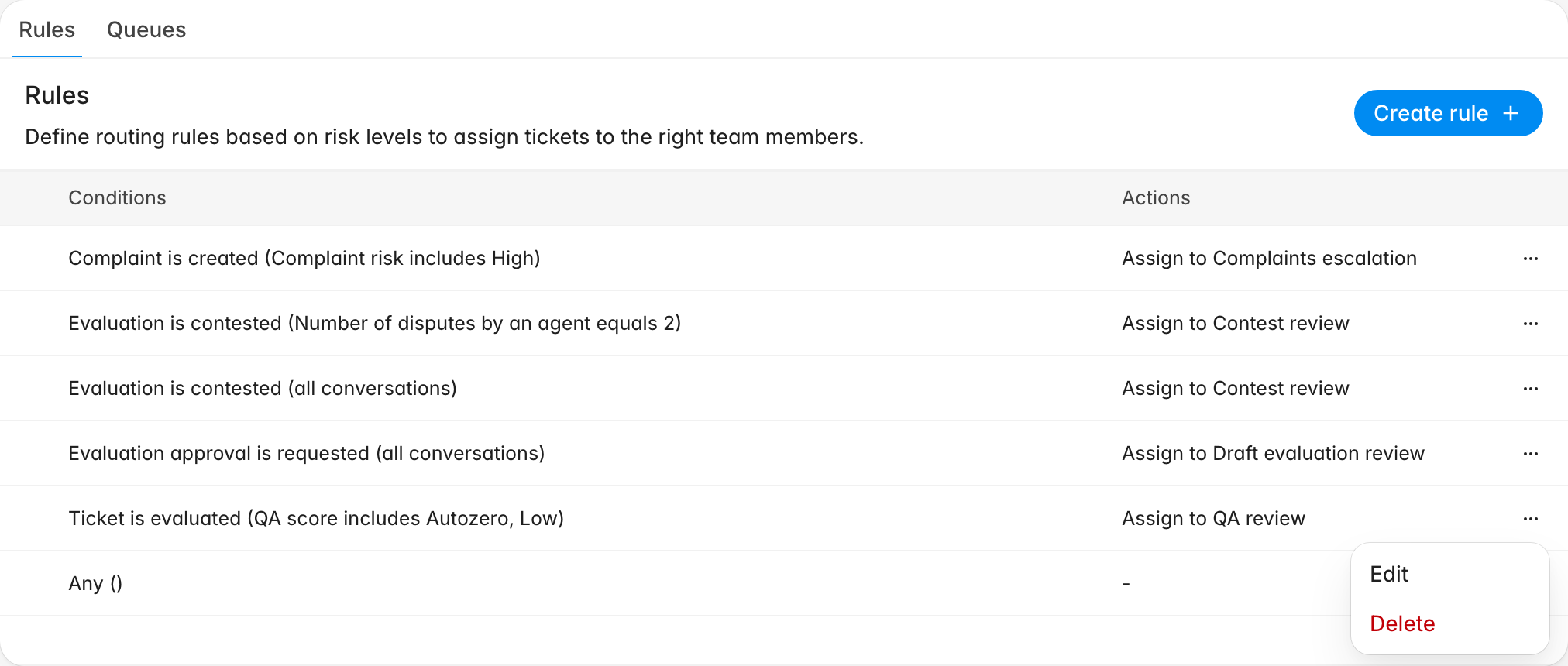
- Open the rule and change what you need.
- Remove a condition or action with the × beside it, or add one with Add condition and Add action.
- Click Save changes.
Delete a rule
Deleting is permanent and there is no undo, so it is worth a moment of thought about the rules below the one you are removing. They have been sitting in its shadow and will start receiving traffic the moment it goes.- Open the row menu and choose Delete.
- Check the rule named in the confirmation against the row you meant to click.
- Click Delete.
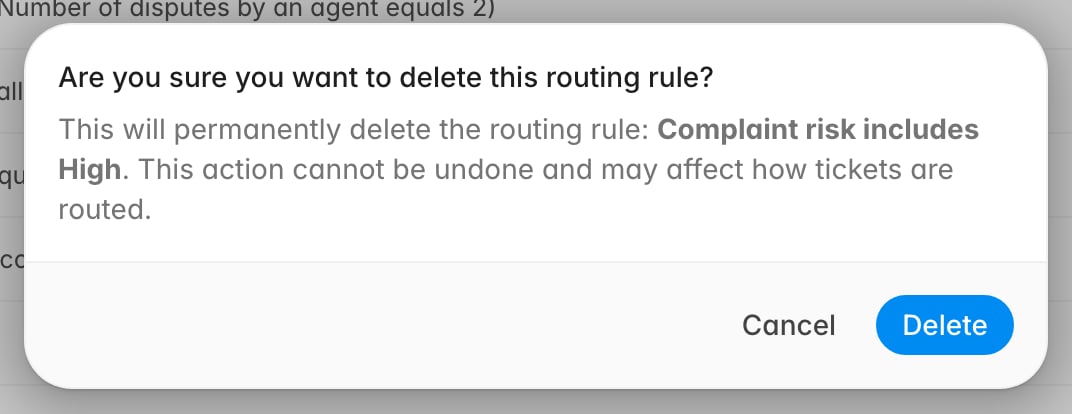
None. A rule with no
conditions has nothing to quote at all and is called Unknown rule. Whenever the
name does not clearly match the row you meant, close the dialog and open the rule
to check.