

Open the editor
On the ticket’s QA workspace, the review tabs sit at the top. If nobody has scored the ticket by hand yet, there is no Manual evaluation tab. Click the + beside the tabs and choose Manual evaluation, which both adds the tab and opens the editor in one step.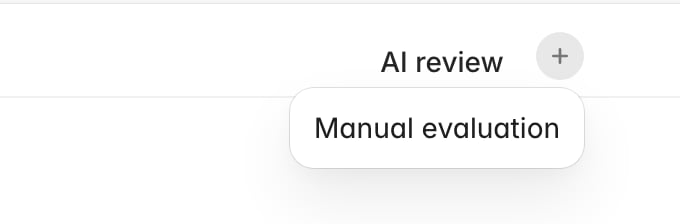
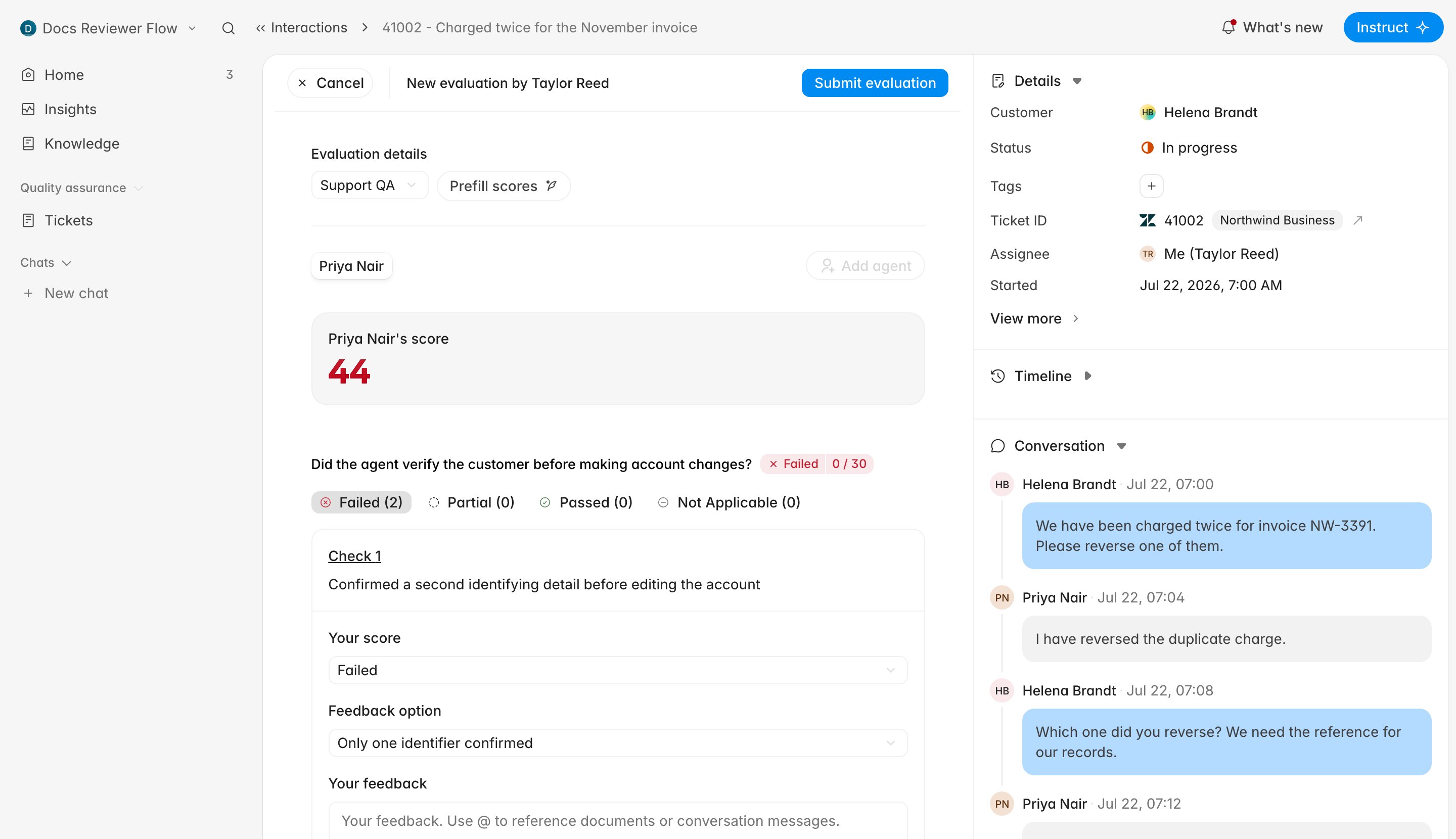
Decide what you are starting from
Under Evaluation details you choose the scorecard, and next to it sits Prefill scores, which sets the starting score for every check.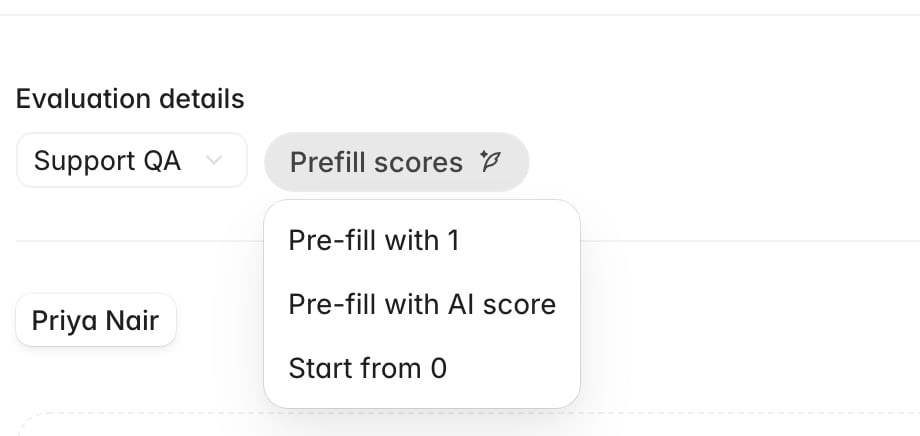
Rulebase also picks a starting point for you when the editor opens: your own
earlier score if you have one, otherwise the AI’s, otherwise full marks.
Pre-fill with 1 does not set anything to 1. It selects the highest score option
on every criterion and marks every check passed, whatever those options are worth
on your scorecard. Read it as “start from a pass”.
Score the criteria
Each criterion on the scorecard becomes a section, and how you score it depends on how the scorecard was built. Criteria with checks are scored one check at a time; criteria without checks are scored directly, and where the AI already scored that criterion its result sits beside yours for comparison. Create a scorecard explains the difference from the author’s side.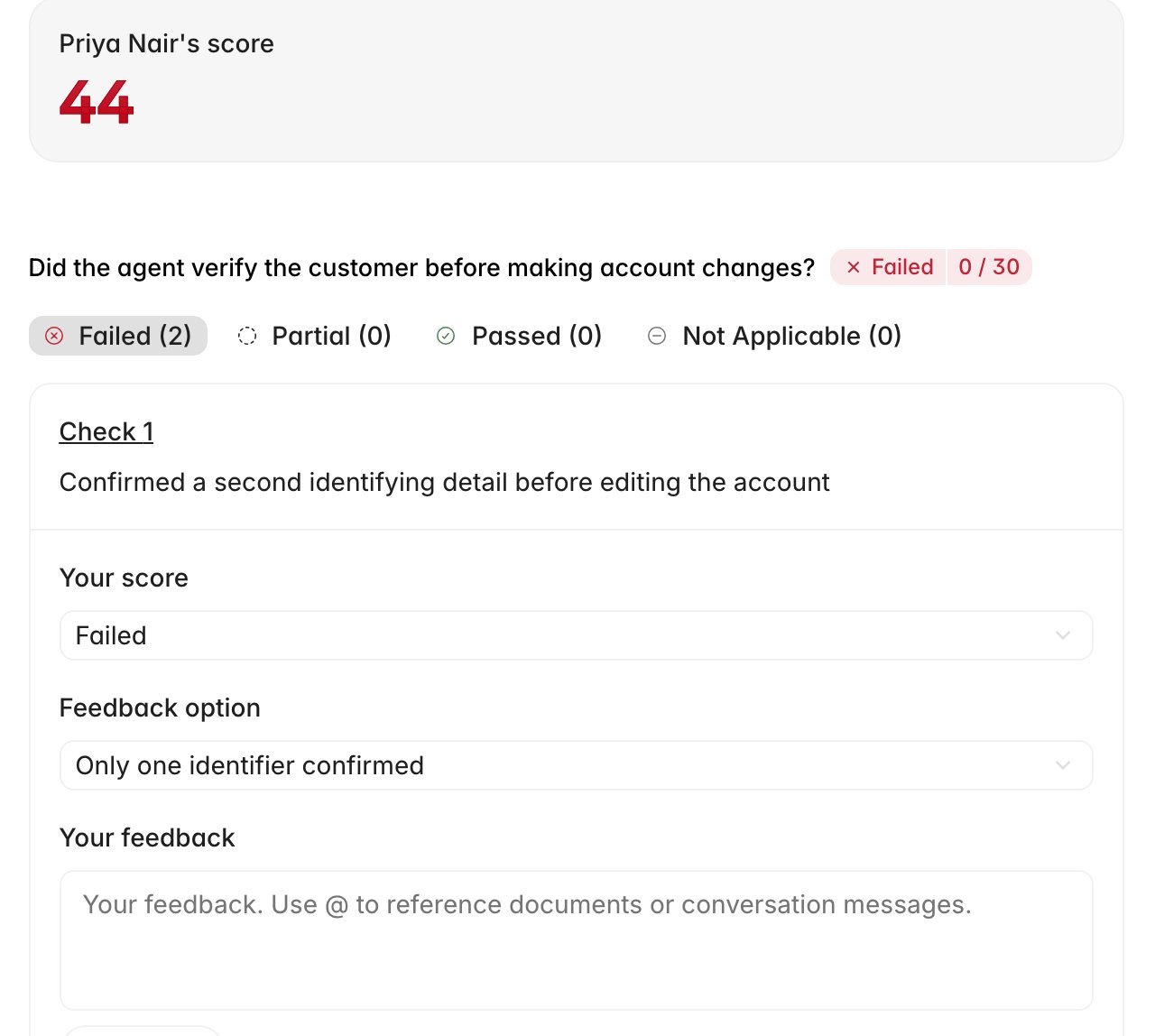
- Your score — passed, failed, partial, or not applicable. Partial only appears where the scorecard defines a partial option.
- Feedback option — appears once you mark a check failed or partial. These are the reusable reasons the scorecard author wrote, and choosing one keeps your reasons consistent with everyone else’s and countable in reports.
- Your feedback — free text, and the part the agent reads. Type
@to reference a document or a specific message in the conversation, and use Attach for a screenshot.
Multi-agent tickets
Where more than one agent handled the ticket, each gets their own tab and their own score for their part of the ticket. Add agent brings in someone who touched the conversation but was not scored automatically, and the × on a tab drops an agent from this evaluation. You do not have to score everyone. Rulebase only requires that at least one agent has been evaluated before you can submit.Submit
Submit evaluation publishes the score. Rulebase saves your evaluation, closes the editor, and the ticket’s headline score updates to reflect the human result. The Manual evaluation tab now sits permanently beside AI review, and opening it shows your scores side by side with the AI’s for the same scorecard. If your role can only submit feedback for approval, the button reads Submit for review instead and your work waits for a reviewer to publish it. The reviewer cannot publish until every failed or partial check has a feedback option chosen, so filling those in as you go saves a round trip. Cancel discards the evaluation, and Rulebase asks first if you have unsaved changes.Related
- Open a ticket’s QA workspace
- Create a scorecard, for how the criteria, checks, and feedback options you are choosing between were defined
- Give feedback on AI QA, when one criterion is wrong and a full manual evaluation is more than you need
- Why is my score different?